 Premier League
 Champions League
 LaLiga
 Serie A
 Bundesliga
 Ligue 1
 National teams
 MLB
 CPBL
 NPB
 KBO League
 Taiwanese players abroad
 League of Legends
 VALORANT
 CS2
 Dota 2
New Football Rules: Understanding the Goalkeeper 8-Second and 5-Second CountdownsGuides · Football · Formats & rules
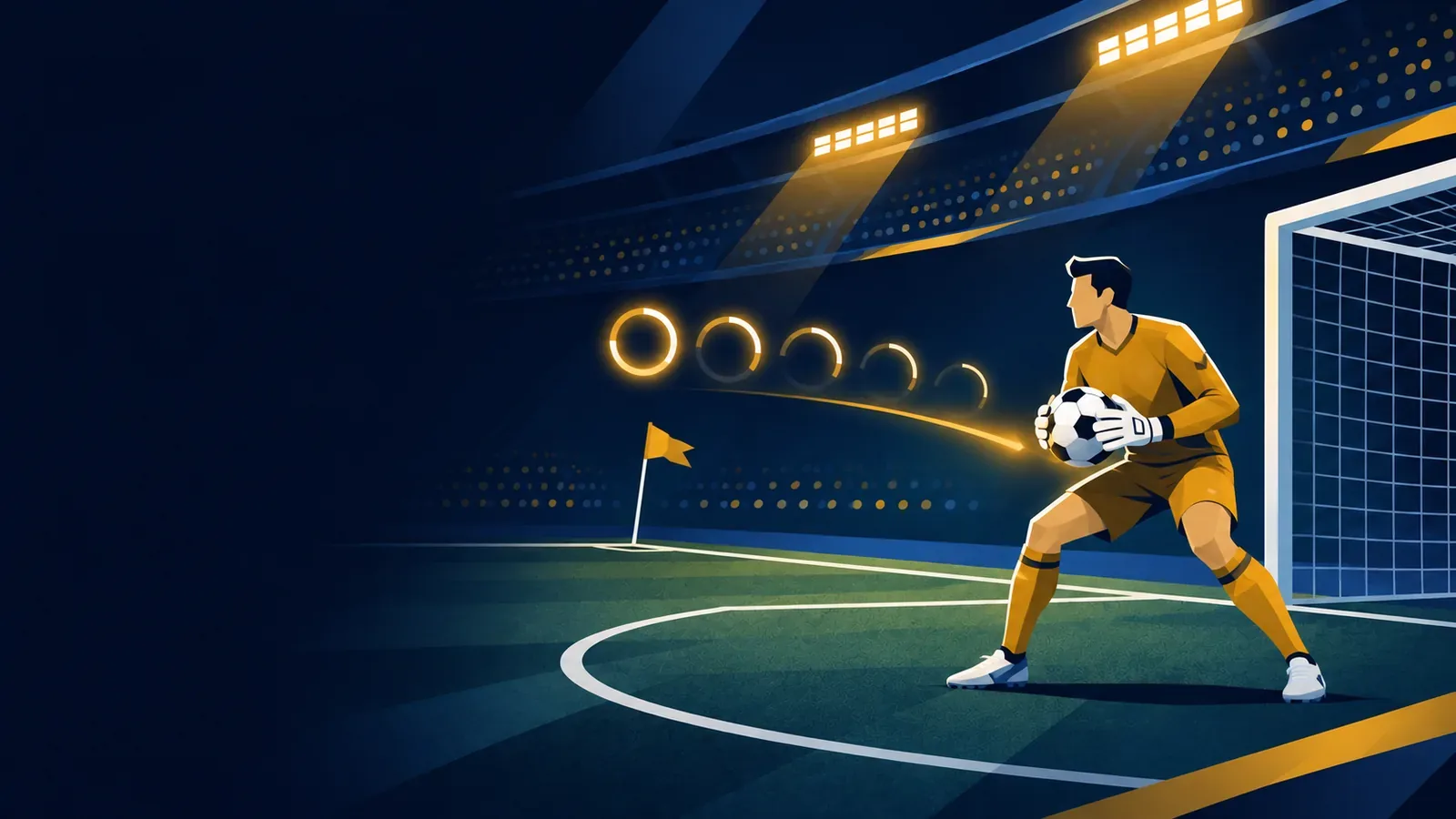
Key points
- A goalkeeper holding the ball for more than 8 seconds concedes a corner kick
- The referee raises a hand for the final 5-second countdown
- 2026/27 adds 5-second countdowns for throw-ins and goal kicks
1Key Takeaways
- Under the 2025/26 rules, if a goalkeeper controls the ball with the hands or arms for more than 8 seconds, the opponent is awarded a corner kick.
- Under the old rule, exceeding 6 seconds resulted in an indirect free kick; the 2025/26 rules changed this.
- The referee raises a hand as a visual countdown for the final 5 seconds.
- New in the 2026/27 rules: when a throw-in or goal kick is being delayed, the referee can do a 5-second visual countdown.
- If a throw-in runs out of time, it goes to the opponent; if a goal kick runs out of time, the opponent is awarded a corner kick.
2Goalkeeper Ball Control: From 6 Seconds to 8 Seconds
IFAB (The International Football Association Board) addressed goalkeeper time-wasting in the 2025/26 rules: if a goalkeeper controls the ball with the hands or arms for more than 8 seconds, the opponent is awarded a corner kick.
| Item | Old rule | 2025/26 rules |
|---|---|---|
| Penalty for exceeding time | Indirect free kick after more than 6 seconds | Opponent corner kick after more than 8 seconds |
3How the Referee Counts Down
The referee raises a hand as a visual countdown for the final 5 seconds. When watching a match, once the referee raises a hand, the ball in the goalkeeper's hands has entered its final 5 seconds.
42026/27: Throw-ins and Goal Kicks Also Have a 5-Second Countdown
New in the 2026/27 rules: when a throw-in or goal kick is being delayed, the referee can do a 5-second visual countdown. If the ball is still not played when the countdown ends:
- Throw-in overtime: the opponent is awarded the throw-in.
- Goal kick overtime: a corner kick is awarded to the opponent.
5What to Watch for When Viewing Matches
- When the referee raises a hand after the goalkeeper catches the ball, the final 5-second countdown has begun.
- If the goalkeeper exceeds 8 seconds, the result is an opponent corner kick, no longer an indirect free kick.
- When a throw-in or goal kick is being delayed, you will also see the referee do a 5-second countdown.
- A goal kick that runs out of time gives the opponent a corner kick; a throw-in that runs out of time gives the opponent the throw-in.
6Frequently Asked Questions
How many seconds can a goalkeeper hold the ball now?
8 seconds. Under the 2025/26 rules, if a goalkeeper controls the ball with the hands or arms for more than 8 seconds, the opponent is awarded a corner kick.
What happens if a goalkeeper holds the ball for more than 8 seconds?
The opponent is awarded a corner kick. Under the old rule, exceeding 6 seconds meant an indirect free kick; that has now been changed.
How does the referee's countdown work?
The referee raises a hand as a visual countdown for the final 5 seconds.
Is the 5-second countdown also used for throw-ins and goal kicks?
Yes. Under the 2026/27 rules, when a throw-in or goal kick is being delayed, the referee can do a 5-second visual countdown. A throw-in that runs out of time goes to the opponent; a goal kick that runs out of time gives the opponent a corner kick.
7CTA
When watching a match, watch whether the referee raises a hand to begin counting down. If you want to verify the regulatory text, you can check directly at the official IFAB links below.
8Sources

Old Parker
Old Parker covers the Premier League, Champions League, Europe's major leagues and international football. He reads matches through schedule load, home-field context and recent form, then uses the numbers to explain formats, qualification routes and viewing times for readers in Taiwan.
View profile and articles ›