 Premier League
 Champions League
 LaLiga
 Serie A
 Bundesliga
 Ligue 1
 National teams
 MLB
 CPBL
 NPB
 KBO League
 Taiwanese players abroad
 League of Legends
 VALORANT
 CS2
 Dota 2
What Is an MLB Lockout? What Will Be Affected When the 2026 CBA ExpiresGuides · Baseball · Formats & rules
Key points
- CBA expires on 12/2 (Wed) at 12:59 Taiwan time
- Trades, signings, and 40-man roster moves completely frozen after a lockout
- The core dispute is the salary cap demanded by owners
1Summary
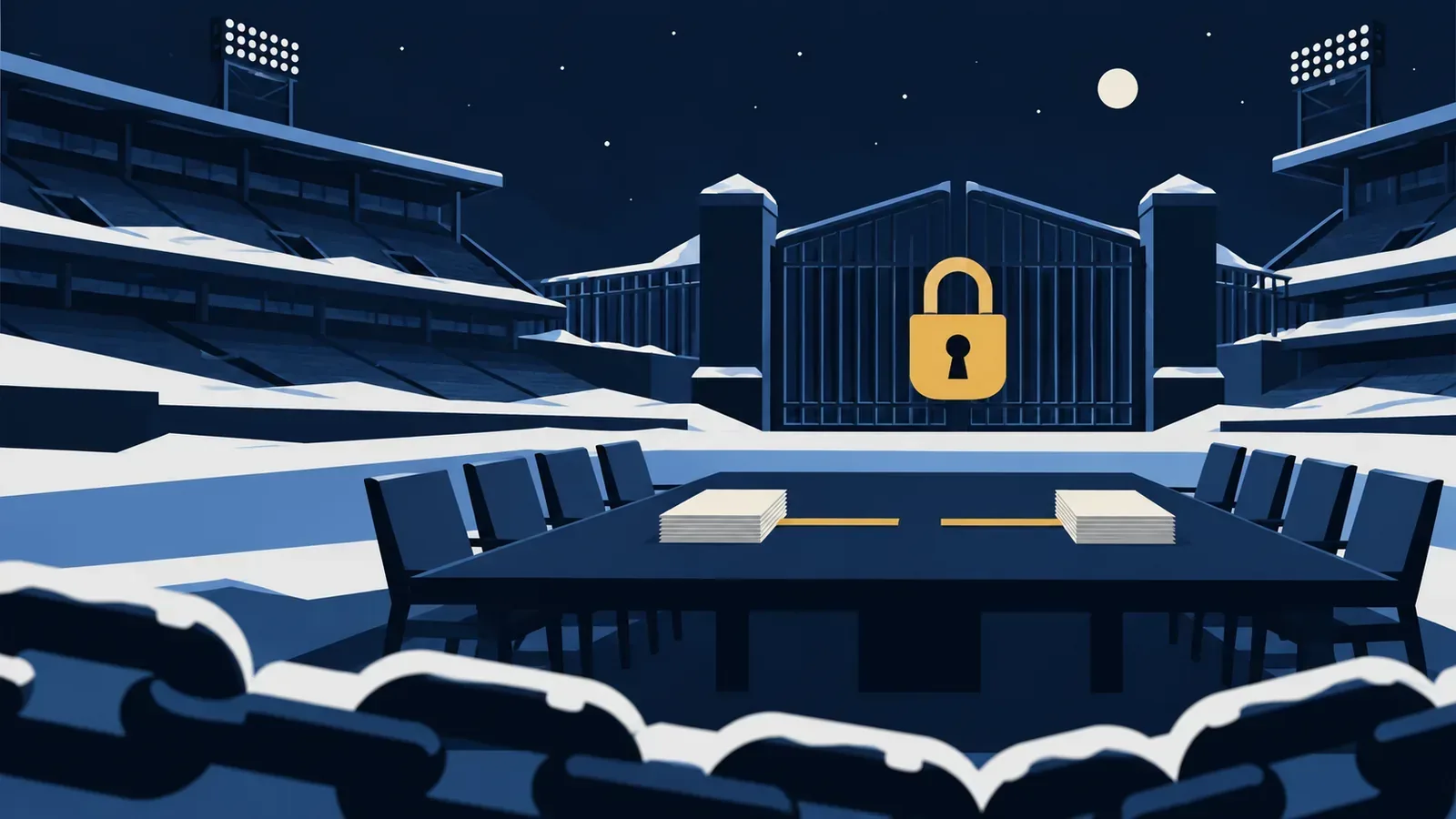
- Major League Baseball's (MLB) current collective bargaining agreement (CBA) expires at 11:59 p.m. ET on Dec 1, which translates to 12/2 (Wed) 12:59 Taiwan time. Multiple media outlets anticipate that if negotiations stall, owners will immediately initiate a lockout.
- A lockout means "owners lock players out," whereas a strike means "players refuse to work on their own." Once a lockout begins, trades, free agent signings, and 40-man roster moves all halt, and club personnel cannot discuss business matters with 40-man roster players.
- Precedents: The 2021–22 lockout lasted 99 days, yet all 162 games were played; the 1994–95 strike lasted 232 days, and the World Series was canceled.
- Latest Progress (Oct 23): Manfred told The Athletic that it is virtually impossible for both sides to agree on extending the current agreement to avert a lockout. Manfred said that Meyer is not prepared to extend under the current deal, nor is he prepared to do so himself. Meyer said an extension has not been discussed yet and that anything is possible; if an extension were really to occur, the minimum salary, luxury tax, and rookie bonus pool would still need to be settled first.
- The single biggest point of contention is the salary cap proposed by owners, which the union has declared completely unacceptable.
- For fans in Taiwan, winter player movement news may grind to a halt, and developments regarding posted players from Japan and Korea will also be delayed.
2When Does the Collective Bargaining Agreement Expire?
The current agreement is a five-year deal signed in March 2022, expiring at 11:59 p.m. ET on Dec 1 (Tue). U.S. Daylight Saving Time ends on Nov 1; converted using EST (UTC-5), that is 12/2 (Wed) 12:59 Taiwan time.
After expiration, owners have the right to implement a lockout, but they are not required to do so. In early October, MLB Deputy Commissioner Dan Halem sent a 34-page memo to owners and executives across all 30 teams, instructing clubs to prepare for a "no-deal" scenario and detailing regulations during a lockout. Media outlets widely consider a lockout nearly inevitable.
The 2021 lockout took effect at 12:01 a.m. ET on Dec 2. If the same pattern is followed, it would begin around 12/2 (Wed) 13:01 Taiwan time, subject to official league announcements.
The path of a short-term extension currently appears unviable. Evan Drellich of The Athletic recorded statements from both figures on Oct 23 in Milwaukee: Manfred stated that it is almost impossible to extend the current agreement and added that he does not want to maintain the status quo; Meyer noted that this has not yet been discussed, and that the minimum salary, luxury tax proceeds, and rookie bonus pool—which were negotiated until the final moment in 2021–22—would not be simple to renew, even in theory. These are accounts from pregame media sessions, not formal announcements from the league or the union. On the same day, Manfred separately told USA Today that he still hopes to reach a deal without a work stoppage.
The union has changed leadership for this cycle: former executive director Tony Clark resigned in February 2026, and Bruce Meyer, the lead negotiator from the prior round, has taken over as interim director.
3What Is the Difference Between a Lockout and a Strike?
Both are "work stoppages"; the difference lies in who presses the pause button.
- Strike: Players collectively refuse to take the field to force concessions from management, as in 1994.
- Lockout: Owners bar players from the door, prohibiting them from using club facilities and doing business with them to force concessions from the union, as in 2021.
Management chooses to lock out in the winter because no games are being played and ticket revenue losses are minimal, while players face the pressure of being unable to sign contracts and having nowhere to train.
4What Stops During a Lockout?
Based on the 2021 experience and the contents of the latest memo, items frozen following a lockout include:
- Trades: Any trade involving players on the 40-man roster is prohibited.
- Free agent signings: Major league contracts cannot be signed under any circumstances. Free agents who remain unsigned prior to the lockout can only wait.
- 40-man roster moves: Rosters are completely frozen; no additions or removals can be made.
- Communication between players and clubs: Club personnel cannot discuss business matters with 40-man roster players, nor can they provide training programs. According to reports, the memo even mandated that holiday cards and gifts had to be sent before Dec 2.
- Official website likenesses: League and team websites will remove active players' photos and videos, just as occurred in 2021.
What remains unaffected: Minor league players not on the 40-man roster may communicate and interact with clubs as usual; the league has also stated it will not prevent players from playing in Japan or in winter leagues.
Will the Winter Meetings proceed as scheduled? In 2021, they were "only half-held": the Major League portion was canceled, while the Minor League portion took place. The Major League phase of the Rule 5 Draft was initially postponed and formally canceled in March 2022, while the Minor League phase took place as scheduled. The 2026 Winter Meetings are scheduled to be held in San Diego, with exact dates subject to official league announcements; multiple media outlets anticipate that the Major League portion will once again be canceled. When the Rule 5 Draft will take place is left to negotiations.
5Precedents: The 1994 Strike and 2021 Lockout
1994–95 Strike: Players began striking on August 12, 1994, when management was also seeking to institute a salary cap. The stoppage lasted 232 days, ending on April 2, 1995. Nearly 950 regular-season games were canceled, and the World Series was called off—marking the first time since 1904 that no World Series took place. This remains the longest work stoppage in MLB history.
2021–22 Lockout: Ran from December 2, 2021, to March 10, 2022, totaling 99 days—the second-longest stoppage in history. Opening Day was pushed back from March 31 to April 7, and postponed games were made up through doubleheaders and mutual off days, allowing the full 162-game schedule to be played. As soon as the lockout was lifted, trades and signings resumed immediately.
Winter stoppages still leave room for resolution; the danger arises if talks drag past spring training. Sports marketing expert Bob Dorfman predicted in an interview with Reuters that in the worst-case scenario, the season could be shortened to 70–80 games; this is an individual perspective, not an official projection.
6What Happens to Posted Players?
For details on how the posting system functions, see MLB Posting and Free Agency System; only the impact of the lockout is covered here. For a full breakdown of Teruaki Sato, see How Teruaki Sato's Posting Works.
The 2021 Precedent of Seiya Suzuki: Hiroshima posted Seiya Suzuki on November 22, 2021, with a 30-day negotiating window. About 10 days later, the lockout struck, and his negotiating window was "frozen." Once the lockout ended, the clock resumed, leaving clubs with roughly 20 days remaining to negotiate. Ultimately, he signed a five-year, $85 million contract with the Cubs on March 18, 2022.
The 2026 Posting List (as of Nov 7):
- Teruaki Sato (Hanshin Tigers, age 27, infielder): Hanshin announced on Oct 19 that it agreed to post him this winter. This season, he posted a .306 batting average, 39 home runs, and 106 RBIs, capturing the Triple Crown. Japanese media reported that Hanshin made an early decision to help shield him from labor negotiation turbulence.
- Si-hwan Roh (Hanwha Eagles, third baseman): A clause in his 11-year contract extension with Hanwha permits him to apply for posting after the 2026 season; if he does not sign with an MLB club within 30 days, he returns to Hanwha to fulfill his contract. Hanwha officially posted him on Nov 1 (source: https://www.mlbtraderumors.com/2026/11/kbos-hanwha-eagles-to-post-si-hwan-roh-for-mlb-teams.html ).
The core problem is timing. NPB players including Teruaki Sato were officially posted on Nov 1 with a 45-day negotiating window; the lockout is expected to occur after the CBA expires on Dec 1. According to The Athletic, this year's posting negotiating window will not pause due to a lockout, meaning players must sign before 17:00 ET on Dec 1 (06:00 Taiwan time on Dec 2), leaving effectively only about 30 days (this detail is based on media reporting and cannot be confirmed via official announcements; source: https://sports.yahoo.com/mlb/article/posted-npb-kbo-players-reportedly-must-sign-before-current-mlb-cba-ends-on-december-1-181736459.html ).
7What Does This Mean for Taiwan Fans?
First, winter player movement news will grind to a halt. During a lockout, there will be no official trades or signings; social media chatter regarding "Team X has interest" is merely preliminary buildup, and contracts must wait until the lockout concludes.
Second, follow Taiwanese players on 40-man rosters. Through the 2026 season, Taiwanese players who have spent time on MLB 40-man rosters include Hao-Yu Lee (Tigers), Kai-Wei Teng (Astros), and Tsung-Che Cheng (Red Sox), while Chung-Ao Chuang-Chen (Athletics) was confirmed through this year's spring training. Clubs adjust their rosters following the end of the season, and official confirmations of who remains on rosters at the moment of a lockout have not yet been released. Players on the roster cannot use club facilities or receive coaching instruction during a lockout and must arrange their own winter training; younger Taiwanese players not on 40-man rosters may interact with clubs as usual.
Third, the international signing process used by Taiwanese players could be overhauled. If management's June 18 proposal passes, international amateur players must turn 18 before September 1 of the signing year (currently 17), and the system would transition into an international draft. Taiwanese players enter through this pathway. That same proposal also aims to eliminate high school player eligibility for the draft in the United States, Canada, and Puerto Rico, which is not the route used by players from Taiwan. Currently, these are merely proposals on the bargaining table and neither side has agreed; whether and how changes occur has not been officially announced.
Fourth, the timeline for Japanese and Korean posted players could be thrown into disarray. Teruaki Sato was poised to be one of the hottest topics in December; if the negotiating window is frozen, his landing spot might not be determined until spring.
Fifth, the real concern is what happens after March. On Sept 25, The Athletic cited an anonymous source familiar with national broadcast contracts: if at least 60 games are canceled in 2027, most national broadcast agreements would be extended by one year from their 2028 expiration to 2029, while 2027 rights fees would still be paid. This is not a league announcement. Regional broadcast contracts lack a uniform clause; in summarizing that report, MLB Trade Rumors noted that certain clubs only face cuts in regional television revenues if fewer than roughly 125 to 145 total games are played across the season, not that 125 to 145 games must be canceled. Our perspective is that a December lockout itself does not warrant panic; the true metric to watch is whether spring training can begin on schedule in February.
8What Are the Two Sides Currently Disputing?
Below are the public proposals as of Nov 7, categorized by each side's stance:
| Issue | Management (MLB) Position | Players Association (MLBPA) Position |
|---|---|---|
| Salary cap | Proposal revised on Nov 3: maintain the current system in 2027; a cap of $258.2 million and floor of $180.2 million pushed back to begin in 2028 (rejected by the union that same day on Nov 3; source: https://www.mlb.com/news/mlb-increases-cap-and-floor-in-latest-proposal-sets-2028-target ) | Adamantly opposed to any form of a cap (source: https://www.nbcsportsphiladelphia.com/mlb/philadelphia-phillies/mlb-lockout-tracker-cba-talks-phillies/764481/ ) |
| Revenue sharing | 50/50 split between clubs and players; pool local broadcast revenues and distribute them equally | Demands greater sharing of local broadcast revenue alongside reductions in ballpark revenue sharing; penalize clubs that do not reinvest revenue-sharing receipts into payroll |
| Minimum salary | Nov 3 version: 2027 minimum salary of $1 million (for players with 2+ years of service) / $900,000 (under 2 years); pre-arbitration bonus pool increased from $50 million to $65 million (source: https://www.nbcsportsphiladelphia.com/mlb/philadelphia-phillies/mlb-lockout-tracker-cba-talks-phillies/764481/ ) | Increase to $1.5 million (source: https://www.nbcsportsphiladelphia.com/mlb/philadelphia-phillies/mlb-lockout-tracker-cba-talks-phillies/764481/ ) |
| Luxury tax threshold | (No public figures disclosed) | Increase from $244 million to $300 million |
| Contract length | Free agents changing teams capped at a maximum of 5 years and $202 million; re-signing with incumbent club capped at a maximum of 6 years and $265 million (effective 2027, contingent upon the union accepting a salary cap) | No specific counterproposal disclosed; union criticizes management for tying all proposals to a salary cap |
| Draft and international players | June 18 proposal: Domestic draft reduced from 20 rounds to 12 rounds beginning in 2027; starting in 2028, players must turn 20 before Sept 1 of the draft year and be at least two years removed from high school graduation. Additionally, implement a 12-round international draft, raising the eligible signing age from 17 before Sept 1 to 18, with $200 million allocated to each draft in year one under hard slot values | June 18 statement: Combined international and domestic signing bonus expenditures would fall by over $1 billion over five years, including a $400 million drop from 2026 to 2027 alone. July 21 proposal: Retain 20 rounds, preserve eligibility for high school and junior college players while allowing college sophomores to enter, keep bonuses negotiable, and move draft to June |
| Free agency window | Aug 27 proposal: A quiet period from 5 days after the World Series through the first day of the Winter Meetings, during which clubs may only finalize re-signings with their own free agents; other players may be spoken with and traded, but cannot sign. Outside free agents may only sign from the first day of the Winter Meetings through Dec 21; players unsigned by then must wait until the first week of February | Meyer stated this establishes an artificial free agency window that erodes player leverage, and noted the entire package remains tethered to a salary cap |
| Schedule and postseason | Oct 8 proposal: Regular season shortened to 154 games beginning in 2029; Division Series expanded to best-of-seven; higher seeds permitted to choose their opponents beginning in 2027 | Stated it would respond at the bargaining table, while criticizing management for tying all proposals to a salary cap |
The Nov 3 management proposal formally incorporated terms allowing players aged 30 or older with 5 years of service to reach free agency and eliminating qualifying offers, while advancing Rule 5 Draft eligibility by one year; the union has not agreed, and reports as late as Nov 7 stated that a "lockout looks nearly certain" (sources: https://www.nbcsportsphiladelphia.com/mlb/philadelphia-phillies/mlb-lockout-tracker-cba-talks-phillies/764481/ ; https://sports.yahoo.com/articles/mlb-lockout-looks-nearly-certain-135515299.html ).
This year's World Series featured a matchup between two small-market clubs, the Brewers and the Rays, with the Brewers ultimately capturing the title. Prior to the World Series, experts interviewed by Reuters held divided opinions: some argued this undermined management's argument for a cap, while others felt it represented at best a "public relations victory" for the union.
9Key Watchpoints
- 12/2 (Wed) 12:59 (Taiwan time): The CBA expires; observe whether management immediately announces a lockout. On Oct 23, Manfred stated it was virtually impossible to extend the current agreement first; he stated on the same day that he still hopes for an agreement without a work stoppage.
- Rule 5 Draft: The Oct 1 memo states that holding the Major League phase depends on negotiations, while the Minor League phase will proceed as scheduled. The memo does not say "mid-December," and exact dates for 2026 have not been officially announced.
- Dec 1 17:00 (ET) Signing Deadline: Teruaki Sato was officially posted on Nov 1 alongside Kaima Taira and Hiromi Itoh in the same window; reports indicate posted players must sign before 17:00 ET on Dec 1 (06:00 Taiwan time on Dec 2) (sources: https://www.mlb.com/news/teruaki-sato-mlb-posting-system ; https://apnews.com/article/japanesekorean-players-posted-mlb-baseball-53176d80932384564ce802bde95e6de1 ).
- San Diego Winter Meetings: Whether the Major League portion will be canceled, and when the Rule 5 Draft will be held.
- February Spring Training: The true dividing line; any delay here triggers real concerns over regular-season game cancellations.
10Frequently Asked Questions
If There Is a Lockout, Will the 2027 Season Be Canceled?
Not necessarily. A lockout begins during the winter; whether games are truly impacted depends on whether negotiations drag past spring training. The 2021–22 lockout lasted 99 days, yet all 162 games were ultimately played.
Can Players Still Play Baseball During a Lockout?
They may participate in other leagues. The memo reported by media outlets explicitly states that the league will not block players from playing in Japan or in winter leagues. However, players on 40-man rosters cannot utilize their parent club's facilities or training resources.
Will Already-Posted Japanese Players Lose Their Opportunity?
Following the 2021 precedent of Seiya Suzuki, the negotiating window was "frozen" rather than "voided," and the clock resumed once the lockout concluded. Whether this situation will be handled identically awaits official clarification. For posting rules, see MLB Posting and Free Agency System.
Can Signings or Trades Still Occur Before the Lockout?
Yes. Prior to expiration, trades and signings proceed as normal; free agents may sign with any of the 30 clubs beginning a few days after the World Series concludes. Thus, the primary window is November, lasting at the latest until the agreement expires at noon on 12/2 Taiwan time; from the evening of 12/1 to noon on 12/2 is still considered prior to expiration.
11Sources
- The Athletic, "Little chance of extending current labor deal to avoid painful lockout, say union, league" (Evan Drellich, 2026-10-23, Manfred and Meyer discussing extending current agreement)
- USA Today, "World Series begins with MLB lockout and labor war on horizon" (Bob Nightengale, 2026-10-23, Manfred says he still hopes to avoid a stoppage)
- The Athletic, "MLB looks to limit free-agent contract length, dollars in latest labor proposal" (Evan Drellich, reprinted by Hawaii Tribune-Herald, 2026-06-28, 5 years / $202M for changing teams, 6 years / $265M for re-signing)
- Associated Press, reprinted by Sportsnet, "MLB owners propose banning high-school signings, adding international draft" (2026-06-18)
- MLB.com, "MLB proposes Domestic and International Drafts to Players Association" (2026-06-18, international age and hard slots)
- MLBPA, "Statement on MLB's Amateur Entry Proposals" (2026-06-18, $400 million less from 2026 to 2027, over $1 billion less over five years)
- MLBPA, "MLBPA Makes Proposals to Protect and Improve Amateur Draft" (2026-07-21)
- USA Today, "MLB makes radical proposal on free agency as lockout looms" (Bob Nightengale, 2026-08-27)
- The Athletic, "In MLB lockout, 60 missed games could be the real deadline" (2026-09-25, national broadcast deals extended to 2029 if at least 60 games canceled)
- MLB Trade Rumors, "Details On Lockout’s Potential Impact On Broadcast Deals" (2026-09-25, summarizing previous article; local broadcasts kick in if fewer than approx. 125 to 145 games played)
- MLB Trade Rumors, "MLB Sends Memo To Teams Outlining Lockout Rules" (Major League phase of Rule 5 Draft decided by negotiations; "mid-December" was written by this article itself, not the original memo)
- Sportico, "MLB CBA Labor Fight: Salary Cap Battle and More Lockout Questions" (2026)
- Just Baseball, "2026-27 MLB Offseason: Key Dates" (2026-10-13)
- Pitcher List, "MLB Lockout 2027: Latest Updates and What It Means" (2026-10-09)
- CBS Sports, "MLB officially proposes salary cap and floor in latest CBA negotiations with players union" (2026-05-28)
- Associated Press, reprinted by Texarkana Gazette, "MLB proposes shortening regular season to 154 games in 2029, expanding Division Series to best-of-7" (2026-10-18)
- CNBC, "Major League Baseball proposes shortening its regular season as it pushes for a salary cap" (2026-10-08)
- Yahoo Sports, "MLB / League 34-page memo revealed: players will not be barred from playing overseas leagues in event of lockout" (2026-10-08)
- Central News Agency, "Ohtani health concerns, Skubal's future, lockout crisis: MLB Dodgers face many variables heading into new season" (2026-10-17)
- Reuters, reprinted by News Tribune, "Experts divided on whether Dodgers' sweep shifts MLB salary cap fight" (2026-10-18)
- MLB.com, "MLBPA appoints Bruce Meyer as interim executive director" (2026-02)
- MLB.com, "Tony Clark resigns as executive director of MLBPA" (2026-02)
- Wikipedia, "2021–22 Major League Baseball lockout"
- TVLine, "MLB Players And Owners Reach Deal To End Lockout; Opening Day Set For April" (2022-03-10)
- CBS Sports, "When is MLB Opening Day 2022? Looking at baseball's altered schedule and key dates as lockout ends" (2022-03)
- Baseball America, "Major League Rule 5 Draft Postponed, Minor League Phase Will Still Take Place" (2021-12)
- MLB Trade Rumors, "2021 Rule 5 Draft Officially Canceled" (2022-03)
- Wikipedia, "1994–95 Major League Baseball strike"
- SABR, "Calcaterra: The 1994-95 baseball strike began 25 years ago today" (2019-08-12)
- CBS Sports, "MLB lockout: How work stoppage impacts Seiya Suzuki and other NPB players coming to MLB" (2021-12-08)
- MLB Trade Rumors, "Latest On Seiya Suzuki's Market" (2022-03-11)
- Wikipedia, "Seiya Suzuki"
- Daily Sports, "Hanshin permits Teruaki Sato to challenge the majors via posting" (2026-10-20)
- Sports Hochi, "[Hanshin] Teruaki Sato's challenge to the majors decided! Club approves posting this offseason" (2026-10-19)
- Sports Illustrated, "Teruaki Sato's MLB Posting Could Get Complicated by Looming Labor Dispute" (2026-10-19)
- Tokyo Sports, "[Seibu] Kaima Taira conveys desire to be posted this offseason to club: 'I have confidence'" (2026-10-20)
- Livedoor News, "Nippon-Ham's Hiromi Itoh eyes challenge to the majors via posting" (2026-10-17)
- MLB Trade Rumors, "KBO's Si Hwan Roh Could Explore MLB Posting Next Offseason" (2026-02-22)
- TVBS, "Good news for players in America! Hao-Yu Lee, Chung-Ao Chuang-Chen make 40-man roster, only 4 Taiwanese players in MLB" (2025-11-19)
- Central News Agency, "Tsung-Che Cheng 2026 season update" (2026-10-20)
- Liberty Times, "Kai-Wei Teng returns to Taiwan after the season" (2026-10)
- Wikipedia, "Winter Meetings"
- Straight Arrow News, "The 2026 World Series is already historic, and it hasn't even started" (2026-10-20)
A-Ji
A-Ji covers MLB, NPB and baseball data across leagues. He considers plate appearances, pitcher usage, fielding position and schedule context together rather than leaning on a single statistic, with a focus on format differences, useful metrics and overseas players followed in Taiwan.
View profile and articles ›