 Premier League
 Champions League
 LaLiga
 Serie A
 Bundesliga
 Ligue 1
 National teams
 MLB
 CPBL
 NPB
 KBO League
 Taiwanese players abroad
 League of Legends
 VALORANT
 CS2
 Dota 2
Badminton Service Rules 2027: How the 1.15-Meter Height Limit Is JudgedGuides · Badminton · Formats & rules
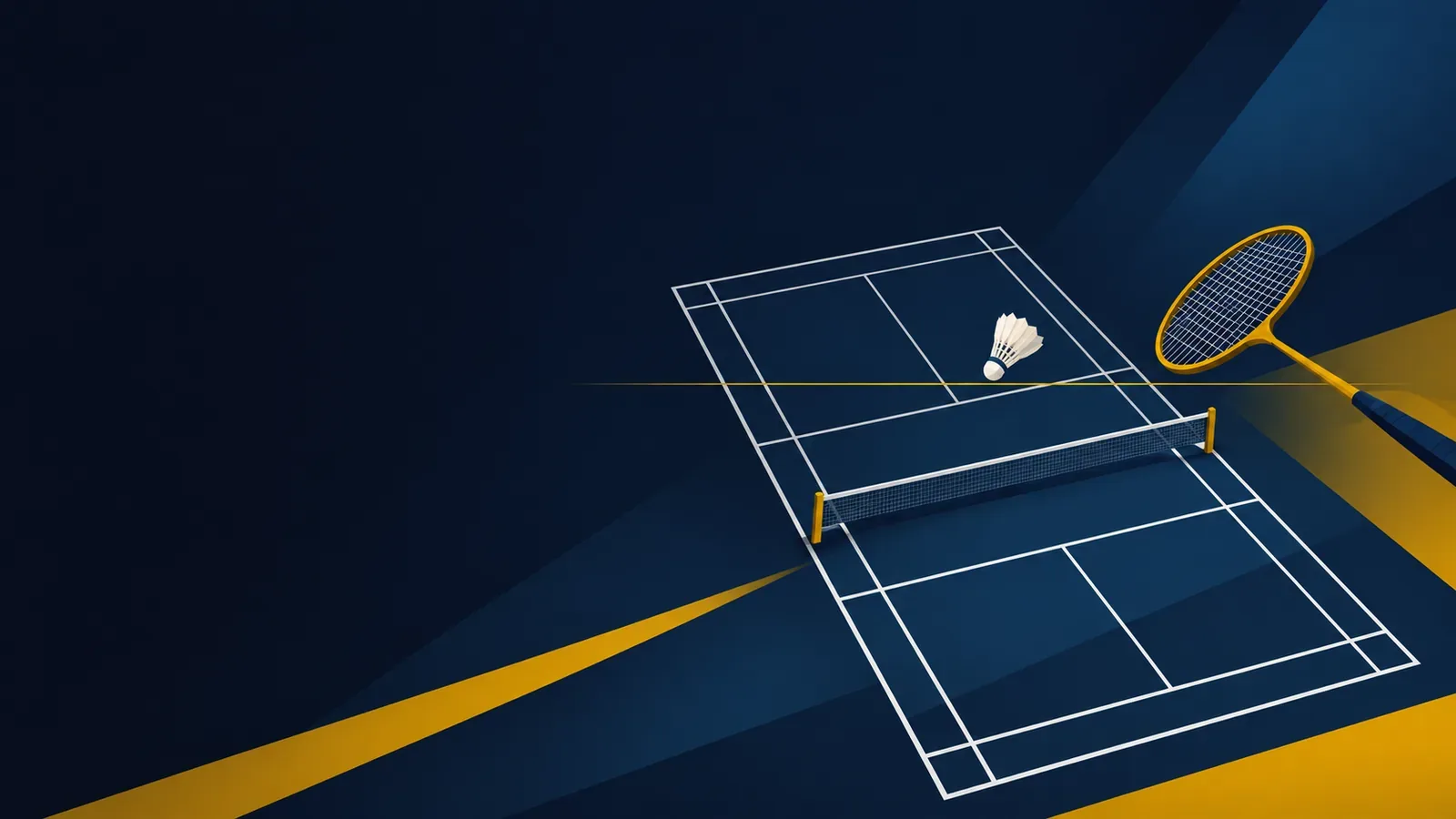
Key points
- The entire shuttlecock must be below 1.15 meters at the instant of being hit
- The racket must hit the base first
- The service movement must be continuous forward
1Key Summary
- At the instant of hitting the shuttle, the entire shuttlecock must be below 1.15 meters from the surface of the court.
- The racket must hit the base of the shuttle first, and spin cannot be added when releasing the shuttle.
- Once the service action begins, the racket must continuously move forward until the shuttle is delivered.
- Both the server and the receiver must stand within diagonally opposite service courts without stepping on the lines, and both feet must remain stationary.
- Service faults are called by the service judge.
The BWF approved the new edition of the rules on April 25, 2026, which takes effect on January 4, 2027; prior to that, the 2025 edition was used. The content below is compiled according to the full text of the rules effective January 4, 2027.
2The 1.15-Meter Height: Judging the Entire Shuttle
The original text of Rule 9.1.6 states "the whole shuttle shall be below 1.15 metres from the surface of the court," which means that at the instant of hitting the shuttle, the entire shuttlecock must be below 1.15 meters from the court surface. The standard of judgment evaluates the entirety of the shuttlecock; if any part of the shuttle exceeds this height, it is considered a fault.
The fixed-height service rule has been mandatory in top-tier tournaments since December 2018. The BWF has been testing service detection devices since March 1, 2021.
3Service Motion Item by Item
| Rule | Content |
|---|---|
| 9.1.5 | The server shall not impart spin when releasing the shuttle, and the racket must hit the base first |
| 9.1.6 | The whole shuttle must be below 1.15 meters from the court surface at the instant of being hit |
| 9.1.7 | Once the service action begins, the racket must continuously move forward until delivered; it cannot pause before hitting |
| 9.1.2 | Any delay following the completion of the backward swing is considered an undue delay |
| 9.1.8 | Attempting to serve and missing the shuttle counts as a fault |
When watching a match, you can watch for three things in order: whether spin is imparted upon releasing the shuttle, whether the racket contacts the base first, and whether the racket stops mid-swing.
4Positioning Rules
- 9.1.3 and 9.1.4: Both the server and the receiver must stand within diagonally opposite service courts without stepping on the boundary lines.
- Some part of both feet must remain in contact with the court surface and remain stationary until the shuttle is delivered.
5Where the Shuttle Must Fly
Rule 9.1: The shuttle shall fly upwards over the net and land in the opponent's service court.
6What Constitutes a Service Fault
According to Rules 13.1 and 13.2, if a service is not correct, it is a fault. The following situations also count as faults:
- In serving, the shuttle is caught on the net.
- After passing over the net, the shuttle is caught in the net.
- The shuttle is hit by the receiver's partner.
Combined with the previously mentioned height, hitting the base first, spinning the shuttle upon release, pausing the motion, and swinging and missing, these are all fault criteria you can directly check against while watching matches.
7Who Calls the Faults
According to Rule 17.3, service faults are called by the service judge. Whether a player's serve complies with the rules is determined by the service judge's decision.
8What to Watch for During Matches
- Where the overall position of the shuttle is at the instant the server strikes it, and whether it is below 1.15 meters.
- Whether the racket hits the base first.
- After the backswing is completed, whether the racket moves forward continuously without pausing.
- Whether the feet of the server and receiver step on the lines or move.
9FAQ
Where on the shuttle is the 1.15 meters measured?
Rule 9.1.6 requires that the entire shuttlecock be below 1.15 meters from the court surface at the instant of being hit; it evaluates the entirety of the shuttle, not a single point.
Can you make the shuttle spin when releasing it?
No. Rule 9.1.5 stipulates that the server shall not impart spin when releasing the shuttle.
Must the racket hit the base first when serving?
Yes. Rule 9.1.5 requires that the racket hit the base first.
Can you pause after the backswing before serving?
No. Rule 9.1.7 requires that once the service action begins, the racket must continuously move forward until delivered; Rule 9.1.2 classifies any delay following the completion of the backswing as an undue delay.
What happens if you swing and miss the serve?
Rule 9.1.8 stipulates that attempting to serve and missing the shuttle counts as a fault.
10CTA
If you want to become familiar with the rules, you can follow along with the service motion table above during the next badminton match: first check the height, then check if the racket strikes the base first. To review the original wording of the regulations, you can directly open the first source at the end of the article to check the service clauses under 9.1 and 13.
11Sources

A-He
A-He is the newsroom's editor-in-chief, covering cross-sport topics, tools, rules explainers and esports. She starts with source quality and the current rulebook, then asks which numbers actually answer the reader's question, making definitions, limits and exceptions easy to compare across sports.
View profile and articles ›